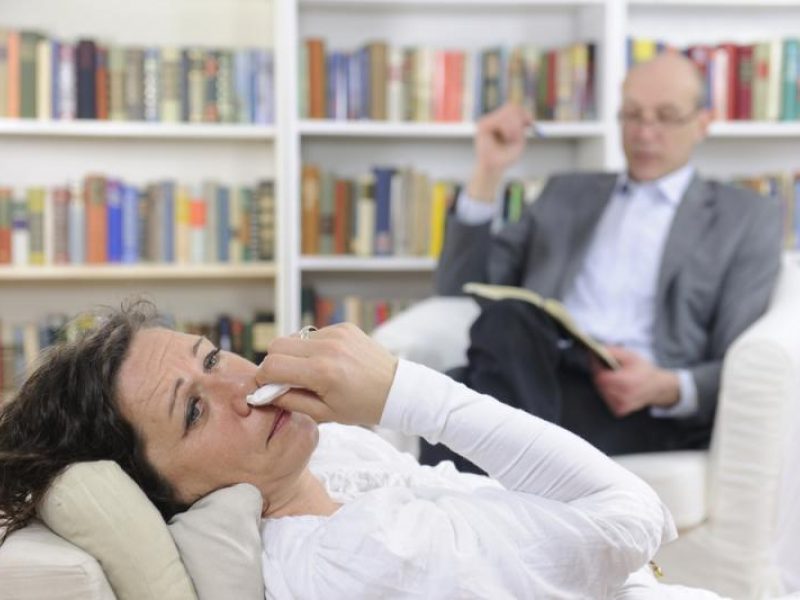
Depression, bipolarity, schizophrenia, anxiety disorders. Psychiatry takes care of mental health disorders. What symptoms? When to alert? Who to consult and when? Our guide.
Definition
A medical discipline in its own right, psychiatry aims to treat mental pathologies. Moreover, the term psychiatry itself takes its origin from the Greek words “psyche”, which means “spirit”, and “iatros,” which indicates the “doctor”. However, in 1808, a certain Johann Christian Reil used the term for the first time to designate all medical procedures ranging from diagnosis to treatment of mental ailments whose origins may be cognitive, affective, or behavioral. Note that child psychiatry refers to the application of this practice to children. There is also talk of psychogeriatrics for the elderly.
List of mental illnesses and disorders
There are several forms of mental illness: neuroses when the patient is aware of his symptoms (depressive state, obsessive, phobic neuroses, OCD, hysteria, post-traumatic stress syndrome, etc.), psychoses when he is not. Awareness of the pathological side of his disorders and is often outside reality or even inhabited by delirium (schizophrenia, paranoia …), mood disorders, and bipolar disorders where the patient presents symptoms by acute attacks and alternates with asymptomatic phases, borderline states with one foot in psychosis and one in neurosis, personality disorders (psychopath, narcissistic perverts).
Anorexia: definition, causes, treatment
“Lack of appetite” Anorexia or is a condition that belongs to the family of eating disorders (ADD). Anorexia primarily affects young women between the ages of 15 and 25 and has the highest suicide death rate of any psychiatric disorder.
Bipolar: what does that mean, what troubles, what to do?
Bipolarity characterized in particular by mood changes can have disabling consequences. How to recognize bipolar disorder? What treatments are there? Update with psychologist Marine Bienaimé.
Bulimia: how to spot it as quickly as possible
Bulimia and binge eating disorders are eating disorders that affect three girls for one boy and often start in adolescence. The earlier the treatment, the better the prognosis.
Depression: the nine symptoms, how to get out?
Dull mood, loss of tone, frequent irritation, fear of the next day? Sleep disorders … One in five people would experience depression in World. More so, women. What symptoms should alert? How to fight against depression? What to do when a loved one is depressed?
Hallucinations: causes, symptoms, and treatments
Auditory, visual, olfactory, gustatory, or even anesthetic … Sensory hallucinations can result from mental disorders and certain diseases or substance consumption. What are the risk profiles? How to recognize hallucinations and treat them.
Hypochondriac: how to know and what to do?
Like the imaginary patient, the hypochondriac believes himself ill because of symptoms that he invents or exaggerates. And by force, he makes himself sick. What are the signs of hypochondria? Are there any tests? What to do to take care of yourself? How to live with it?
Neurosis: what definition, what symptoms?
Hysterical, obsessive, anxiety, phobic neurosis … What does this term mean? What are the signs of neurosis? The causes? Treatments?
Paranoia: symptoms, what to do in the event of a paranoid crisis?
Paranoia, delirium, or paranoid psychosis, is a disease based on delusions of persecution to which the patient fully adheres and handicaps him and those around him. What to do in the event of a crisis? What triggers it? The difference with a paranoid personality, symptoms, causes, tests, and treatments to cure it.
Psychosis: definition, symptoms, treatments?
Psychosis is a mental illness that corresponds to a loss of contact with reality. Definition, infantile, puerperal, chronic psychosis, causes, symptoms, treatments, and prevention.
Schizophrenia: what is it, what symptoms?
Schizophrenia is a psychiatric illness characterized by a severe division of the personality and loss of contact with reality. Test for it, symptoms, treatments, and drugs.
Trichotillomania: symptoms, causes, how to stop?
Trichotillomania is a so-called “autoregressive” disorder characterized by compulsive pulling out of his hair, beard hair, eyelashes, or eyebrows. What are the causes? Is it a knock? What treatments to overcome and cure it? Minoxidil? Hypnosis?
Behavior disorder: definition, who to consult, treatments
A behavioral disorder reflects a psychic disorder. It can affect different spheres: food, mood, sex…. What are they? What are the manifestations? And the treatments
Mental health care professionals
- Psychoanalyst: definition, training, how does he treat?
- Psychiatrist: what is the difference with the psychologist?
- Psychologist: who, when, and why to consult?
- When to consult a child psychiatrist?
The general practitioner is generally the first point of contact when you have mental disorders. He can prescribe Medication Therapy Management against mental disorders if he deems it necessary. Not having been trained to practice psychotherapy, he has more of a support and advice role. It is therefore quite naturally that he then passes the hand to a fellow psychologist or psychiatrist. Other health professionals, whatever their specialties, often have a network of colleagues. So you can also ask them to recommend a psychologist or psychiatrist.
 The Creative Journal