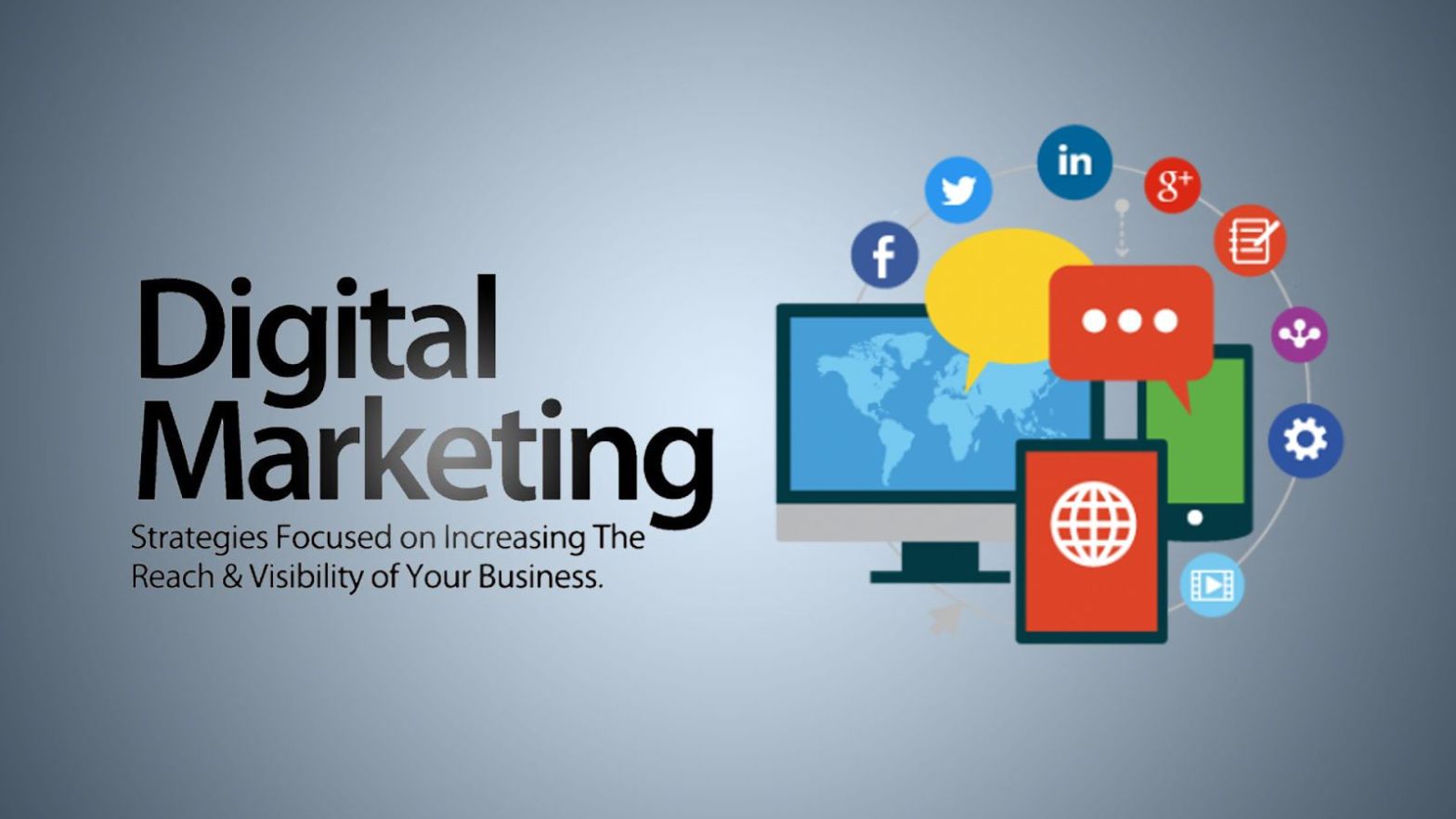
Definition of Digital Marketing
As a reminder, digital marketing, also called e-marketing, web marketing, or digital marketing, consists of promoting a product or service on the internet, to a targeted audience, by relying on:
Read More: Five Reasons Why Digital Marketing is Important for Your Business
- Many media (computer, tablet, mobile, etc.),
- A set of marketing tools,
- Methods and strategies (inbound, outbound, etc.).
What is a Digital Marketing Campaign?
A digital marketing campaign corresponds to the coordination of all these elements to serve the actions that make up this strategy.
For example, you can select to launch a campaign by sharing some of your most interesting and popular content on a particular social media, like twitter or LinkedIn, to generate more leads.
The Objectives of a Digital Strategy
The digital strategy is nothing other than a series of actions intended to achieve one or more objective (s) defined in an action plan, such as:
- raise the visibility of your product on the internet;
- generate traffic to your Website
- improve the user experience
- decrease your bounce rate
- generate quality leads
- acquire prospects
- improve customer relations
- develop your content marketing ( content marketing ) to attract and interest your target
- convert your visitors
You will understand: to build a successful digital strategy, you must take care of your online marketing, but that’s not all. A complete digital strategy also includes a digital communication strategy.
How to develop a digital marketing strategy?
What are the steps to define a web marketing strategy?
1: Analyze the Market Situation
This step takes place before the implementation of a digital strategy before any decision-making. Knowing the current state of the market allows you to understand your target and better understand their expectations while assessing the competition.
Through market research, you can analyze:
- competitors and their practices,
- consumer behavior,
- market trends,
- the geographic areas where your brand is present
Evaluating the competitive context allows you to know how to position yourself against your competitors, refine the marketing targeting of your audience and start to envision your digital project from both a marketing and communication point of view.
2: Define its Objectives
To prepare your strategy, bring together the teams and managers of the company to set a course in unison. It’s about discussing goals over some time.
Depending on the needs formulated at the analysis stage, various objectives can be envisaged, including:
- Visibility: development of your notoriety through the brand image and your online presence,
- Traffic: traffic generation,
- Lead: generation of leads (prospects), conversion,
- Customer experience: improving the experience for consumers.
3: Define its Key Performance Indicators
The KPI (Key Performance Indicators) will help you to effectively measure performance. These are, for example, one of its key performance indicators
The KPI (Key Performance Indicators) will help you to effectively measure performance. These are, for example:
- SEO status,
- the rate of traffic created on your Website,
- the conversion rate,
- time spent on your site,
- ROI (return on investment).
4: Define its Budget
As for the budget, this will determine the means you will use to complete your goals.
There is a wide variety of opportunities on the web, all with their advantages and disadvantages, as well as their own cost.
5: Identify its Buyer Personas
By “buyer personas, “we mean the target group to which your offer is addressed. To do this, it is about identifying the detailed profiles of your ideal customers to orient their communication according to them and, in fine, to understand their purchasing decision by knowing their expectations, their habits, and their characteristics.
What strategy and what support (s) to use to identify them? Social media analysis tools are a great place to start, instead of a complex study of your customers and their profile, for example. Thus, you can study the characteristics of your audience on Twitter analytics, for example, Instagram analytics, or even Facebook Insights.
6 To Reflect on its Website
Your Website is the showcase of your brand. It must be neat because it is the first point of contact with your future customers and partners, suppliers, and employees.
The domain name should also be considered, as it acts as a gateway to your brand’s universe.
Finally, dependent on your goals, it is important to think about the format of your online presence: showcase site, merchant site, the marketplace, blog, etc.
Get free and personalized support with the So local Digital Audit to:
- Analyze your entire digital presence, whether it is your websites, blogs, or business pages (Yellow Pages, Facebook, etc.);
- identify your strengths and weaknesses online;
- Benefit from advice via an action plan.
 The Creative Journal