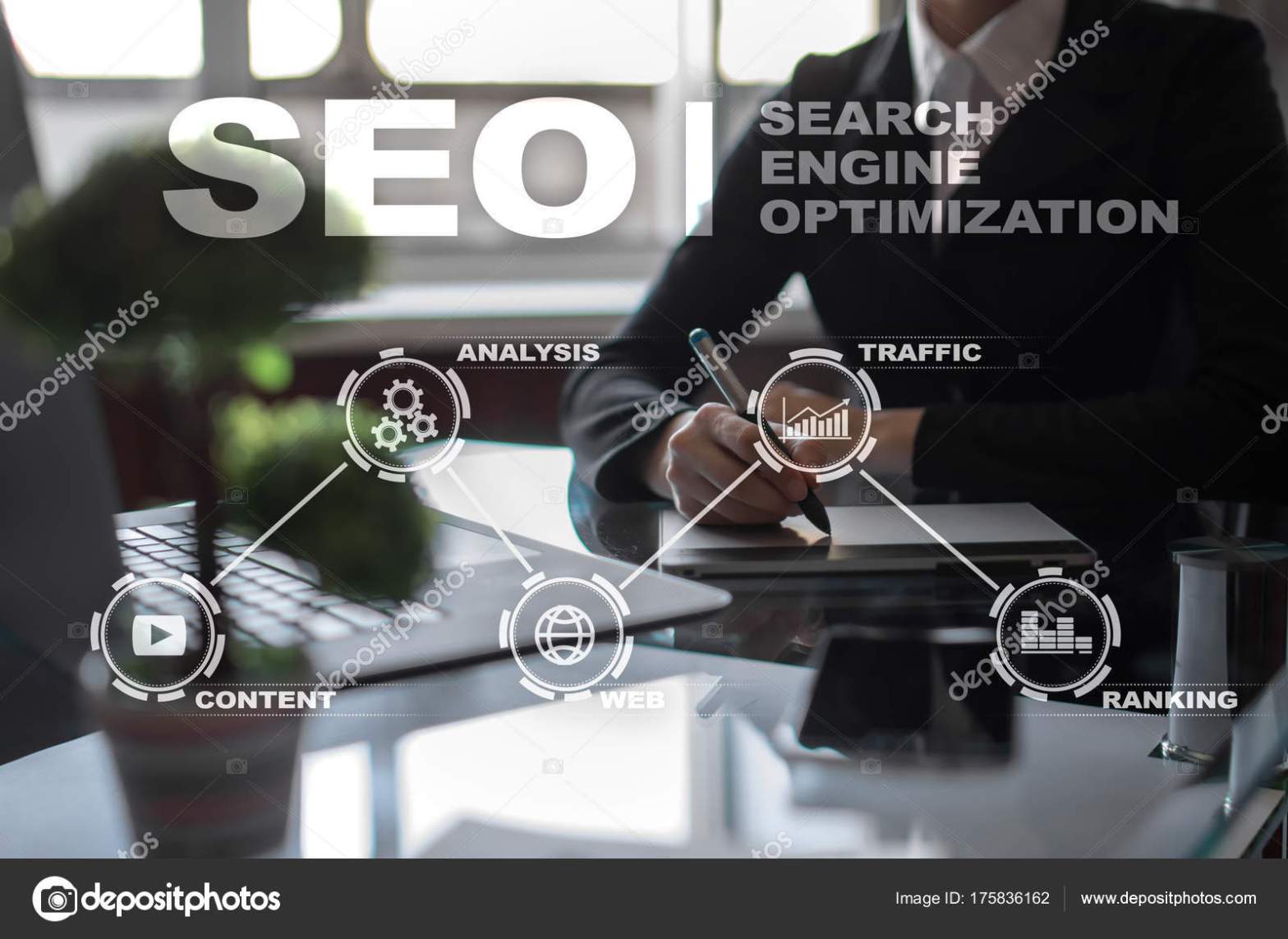
SEO, What Is It?
Some definitions and some vocabulary
“SEO, for Search Engine Optimization, is the pretty name given to organic SEO, also called natural or free SEO. These are the set of techniques designed to improve a site’s positioning in organic search engine results and generate traffic that can be converted. “
The SEO involves sticking the requirements and Google operating modes, which concentrates 75% to over 90% of search queries in different countries. The position is obtained from the relevance score assigned to the page by the search engine’s algorithm on a given question.
It is not the result of a payment made to the search engine, unlike what happens with the use of commercial links. SEO is, along with commercial links (SEA), the two main components of Search Engine Marketing.
Why Do SEO?
Concretely, a well-optimized site is a site that appears in the first results of Google, Bing, Yahoo when you type the relevant keywords in the search bar. And besides, a place well optimized for SEO is a more efficient site for SEM.
In this article, we’ll be thinking primarily about Google because it is the most used search engine today (Google monopolizes 90% of the market!). But SEO techniques are similar for other search engines.
The Objectives of SEO Optimization
Natural referencing is essential today in the world. There are more than one billion websites on the Web and about 30 000 billion pages in Google’s indexes. For the best SEO optimization website, you must have to contact any reputable SEO Company in Pakistan.
Therefore, the only way to render a website accessible is to customize it by applying the search engine rules that is Google. You may have the world’s most beautiful place, but it’s very likely to remain invisible without an SEO.
- You can spend enormously on funded connect campaigns, either. Yet you’ll stop featuring in search engine results as soon as you stop paying!
- Either you carefully optimize your pages and your content, making your site THE answer to your audience’s questions. So SEO does that!
There are many online sales techniques available. Depriving yourself of that would be unacceptable. This is paid referencing or the animation of your social networks when you have the budget and the time.
If the advertising will attract the eye of the Internet user who surfs without a specific goal and, if the Community Manager will initiate a conversation with the Internet user who is already interested in your brand, it is natural referencing that will allow the long term to capture Internet users who are looking for a precise answer to their needs!
To improve your SEO, you need to create and publish quality content. It is not about pleasing Google, it is above all necessary to interest and retain your audience!
In this, the objective of SEO is twofold:
- Generate traffic
- Increase the number of prospects
Three Important Levers for SEO
Site optimization
This is the heart of the work.
Make sure your site is well structured with a clear and defined architecture.
In addition, good internal networking is essential: do not hesitate to put links that redirect to other pages of your site. Also, provide your sitemap to Google Console, with this, it will be able to identify Your website sites and connections between them.
Finally, a secure HTTPS site is also valued in the eyes of Google.
The content and the choice of keywords.
To have effective SEO, useful, and compelling content is essential.
To insert keywords, you need to think about the questions that are asked by your audience. Right keywords are usually made up of several words. They are the happy medium between a keyword precise enough to answer the Internet user’s request, but also generalist to be the object of a large volume of research.
There are methods for researching keywords. They must be impactful. For this you must:
- List a large number of keywords yourself, based on your knowledge of your personas and using a thesaurus.
- Use a Google Adwords keyword planner to get an idea of the search volumes for those keywords.
- Make a selection of keywords from the final list.
We also recommend some free tools to improve your content.
First of all, Google Keyword Planner thanks to this one “you can keep up to date with trends at the keyword level. This allows you to refine our campaigns on the Search network and ensure that your content is always relevant”.
Then Ubersuggest. This tool helps generate keyword ideas. There are hundreds of suggestions from free keyword tools. You also have access to keyword volume, competition, and trends for each keyword used today.
To end AnswerThePublic. This tool is, without a doubt, exceptional in its design. Its purpose is to provide an overview of the research helps you to make simple data visualizations, that is to say, that it is a generator of questions and associations of ideas on a given theme. Within seconds, it identifies a whole series of issues related to a word or phrase.
Netlinking
Finally, we must talk about Netlinking. This aims to set up inbound links to increase both its Trust Flow and its Citation Flow. These are barbaric words but don’t worry:
- “Trust Flow is the consistency of the backlinks that lead to your website. Indeed, the more your links come from trusted locations, the more weight these links will have and, therefore, a high Trust Flow. “
- “Flow quotation reflects the number of backlinks pointing to your section. The more inbound links you have, the higher your Citation Flow will be. “
These two measures should have the highest possible score. A high score indicates that your links are from quality sites there are a variety of ways of having quality links:
- Obtain links from your customers and partners.
- Make and give Press Releases to general and specialized press. Having an article in a renowned media with an excellent reputation increases your Trust Flow.
- Work with people with a “network” and influential individuals in your industry and offer a product or service for an article.
- Exchange links with people working in the same industry.
How Do You Improve Your SEO?
To understand the SEO approach and the SEO criteria, let’s see how search engines choose to place one page or another in the first position of its results.
Each search engine uses its algorithms to reference all the pages on the Web and to rank them. If the rules of these algorithms are not public, we nevertheless know how they work thanks to the multiple tests and research of digital marketing professionals.
The algorithms will enhance or on the contrary, penalize individual pages according to three main criteria that we will detail below:
- their technical structure their content
- their reputation
The difficulty with SEO is that the algorithms keep changing! The referencing principles valid ten years ago are no longer the rules of the game today: For example, it was possible before to “fool” Google and positioned a page well on a keyword, by merely repeating many times this word in the content of the page.
Today, Google’s algorithm has been refined, and this technique is not enough. Worse: the abuse of the same word, without bringing meaning to the content and without using the lexical field of the name is penalized!
Technically, the engines send crawling bots, crawlers that will scroll through all the pages on the Web and read the HTML code.
These robots will analyze texts, titles, captions of images and videos, etc. on each page and index them, that is to say, classify them in the directory of pages of the search engine.
Subsequently, when an Internet user requests the search engine, the latter will look in its index of pages to find which results best meet the request, according to a set of relevance and notoriety criteria.
The search engine’s purpose is simple: to return the most relevant results to each request. You must, therefore, share this objective, and understand which are the queries on which your product or service is the most relevant answer.
Even though search engine algorithms change, we can understand which are the main criteria taken into account in the natural referencing of pages.
Here are some SEO criteria are taken into account by engines today:
- Site architecture
- Page performance: loading speed, mobile-friendly pages (responsive)
- Keywords and keyword density as well as the use of the lexical field around keywords, their synonyms, and related expressions
- Quality content, insufficient volume, unique and original, well written and with a clean HTML code
- The domain name
- The backlinks, that is to say, the external links which return towards your site
 The Creative Journal